The Covenant, the historic heart of Rancho Santa Fe
The Covenant is the historic heart of Rancho Santa Fe: a 1928 protective covenant, winding roads, and Lilian Rice’s village.
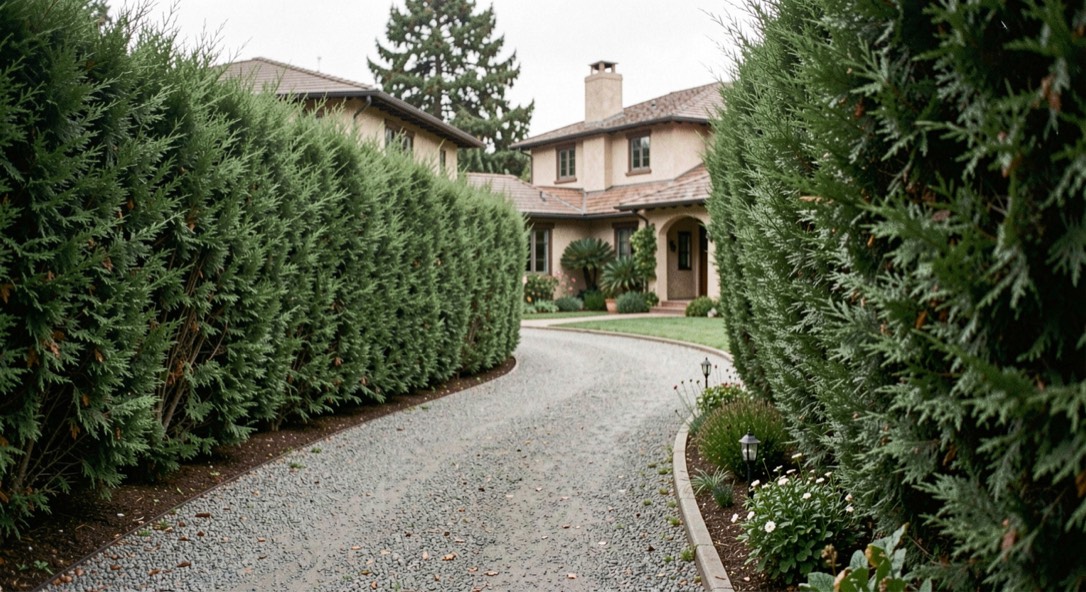
At the center of Rancho Santa Fe lies the Covenant, roughly two thousand acres of winding lanes, oak groves and estate gardens bound together by one of the most consequential private documents in California suburbia: a protective covenant recorded in 1928. Its full name, the Rancho Santa Fe Protective Covenant, describes exactly what it does. It protects, deliberately and with teeth, a landscape that its authors believed was worth subordinating individual whim to a shared idea.
A railway’s timber plantation becomes a colony
The story begins with trees. In the early twentieth century the Santa Fe Land Improvement Company, a subsidiary of the Atchison, Topeka and Santa Fe Railway, planted vast stands of eucalyptus across its San Diego County ranch land, intending the fast growing hardwood for railroad ties. The timber proved unsuited to the purpose, and the company was left with a beautiful problem: thousands of acres of graceful, useless trees on rolling land a few miles inland from the Pacific. The answer, conceived in the early 1920s, was a residential colony of unusual seriousness, with a planned village civic center, a licensed architect of real talent, and rules.
That architect was Lilian Rice, whose Spanish Colonial Revival civic center still defines the village; her story is told in our essay on Lilian Rice and the Spanish Colonial Revival. The deeper structural story is the Covenant itself. Rather than selling lots and hoping, the developers bound the land: minimum costs and lot sizes, design review before construction, limits on commerce, protections for the rural streetscape. Buyers received not merely property but membership in an association, and the association received the power to say no.
The eucalyptus came first, planted for railroad ties that were never milled; the houses arrived among them as if they had always been intended.
What the Covenant governs today
Nearly a century later, the machinery still turns. The Rancho Santa Fe Association administers the Covenant, and its art jury reviews plans for new homes, additions, walls, landscape changes and anything else visible from the street or the trail. The review is aesthetic and contextual rather than merely technical: massing, height, materials, colors and the relationship of house to lot all fall within its attention. Owners grumble, as owners everywhere grumble, and then, more often than not, they defend the same rules when a neighbor’s project threatens the shared scene. That tension is not a flaw in the system; it is the system.
The Covenant also maintains the commons: roadside easements, the trail network that riders and walkers use across private land, and the shared expectation that a lane’s character belongs to everyone on it. The trails deserve their own treatment in our bridle trail essay, because they are the Covenant’s most generous daily gift to ordinary life.
The feel of the place
Descriptions of the Covenant concentrate on wealth, which is the least interesting thing about it. What a visitor actually notices is the vegetation closing over the roads, the absence of sidewalks and streetlights in the residential tracts, the long views that open and shut between groves, and the silence, real silence, eight miles from a major metropolitan coastline. Streets curve because the plan followed the land rather than the surveyor’s grid. Houses sit back because the covenant required it a century ago. The result reads less like a suburb than like a game preserve that happens to contain houses.
The village at its heart, listed on the National Register of Historic Places as a historic district, holds the civic center, the inn that began as a guest lodge, and a modest commercial core under arcades. Our journal keeps a running account of its mornings in a village morning walk.
Houses inside the Covenant were built for a climate of dry summers and mild winters, and their porches, mantels and stair rails have always asked for something green in December. A door wreath is the simplest answer, though not every wreath is the same: noble fir holds a different shape and scent than a mixed evergreen bundle, and a porch rail needs a different length of garland than a staircase. A short guide to fresh evergreen wreaths by hand explains how each one is built and how much material a given rail or mantel takes.
Field notes
- The Covenant is a 1928 recorded agreement, administered by the community association with design review by an art jury.
- Its landscape began as a failed eucalyptus timber plantation owned by a railway subsidiary.
- Living inside it means accepting review of visible changes in exchange for the protection of everything around you.
To place the Covenant among its neighbors, read the full Rancho Santa Fe neighborhoods guide, and for the architectural language the art jury protects, our pages on California ranch architecture.