Ranch architecture in Rancho Santa Fe and beyond
Ranch architecture in Rancho Santa Fe and California: Monterey Colonial, Spanish Colonial Revival, Lilian Rice, and the modern farmhouse.
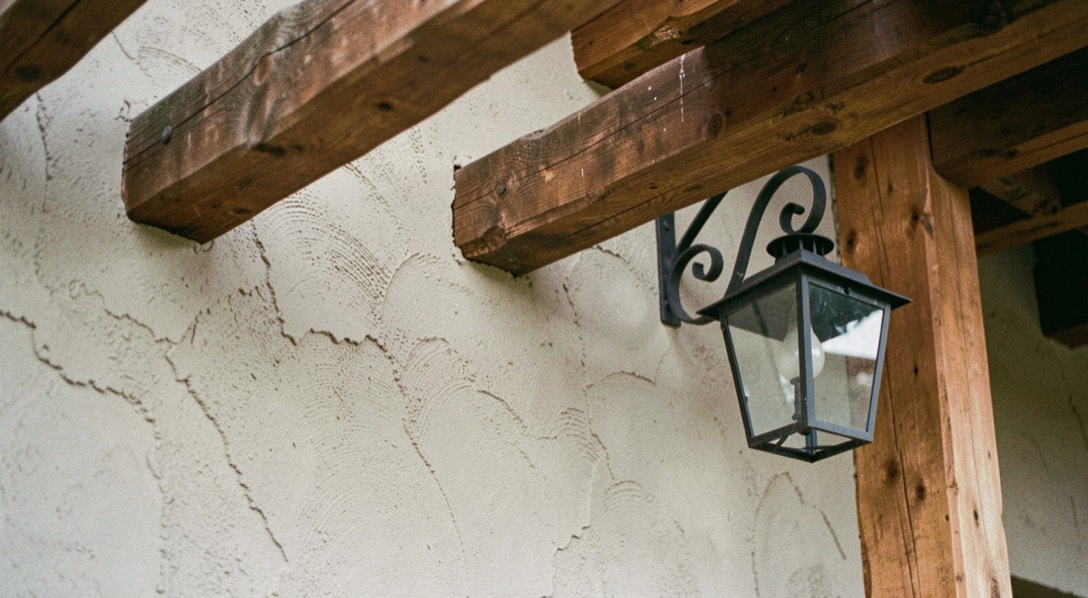
The houses of Rancho Santa Fe obey a soft code. White plaster walls, low pitched red tile roofs, deep set windows and courtyards behind garden walls: these were the vocabulary laid down in the 1920s, and the community’s design review has kept the language intelligible for a century. Understanding that language changes how you see every street in the Covenant.
This section traces the traditions. Spanish Colonial Revival arrived with the 1915 Panama California Exposition in Balboa Park and found its most graceful local interpreter in Lilian Rice, the master architect of the original subdivision. Monterey Colonial contributed an older, quieter model, a two story adobe form with New England woodwork, that keeps reappearing in contemporary plans. The Ranch house itself, that great California invention of the mid twentieth century, deserves its own reckoning.
Begin with Rice, whose story and the village are inseparable, then meet Monterey Colonial, the style most visitors misidentify. Our buying section explains how architecture review works in practice when you plan changes to a protected home.
Rancho Santa Fe's ranch houses were never only a local taste. They belong to a wider conversation about climate, materials and energy that continues today, and readers who want the French side of that conversation can follow it at Architecture écologique, a site on ecological architecture and sustainable living from land to building site. It covers design principles, renovation order, insulation, summer comfort and material choices, written for owners preparing construction, renovation or landscaping work. The concerns overlap: shade, orientation, mass and ventilation decide how a house behaves long before any finish is chosen.
Architecture writing wanders easily into decoration talk, so we hold these pages to a stricter brief: name the parts, date the fashions, explain the logic, and connect the building customs to the climate and institutions that produced them. A roof pitch here is never only a roof pitch; it is shade arithmetic, a covenant preference and a century of habit, all arguing quietly with each other. That argument is the subject.
From this section
-
Solar and ground energy in one house
How a house is heated, cooled and ventilated with solar and ground energy: the thermal barrier in an exterior wall, earth tubes and a roof that collects. 5 min read
-
Lilian Rice gave Rancho Santa Fe its architectural voice
Lilian Rice gave Rancho Santa Fe its architectural voice. Her Spanish Colonial Revival work still shapes the village and the Covenant. 4 min read
-
Monterey Colonial, California’s quietest great style
Monterey Colonial blends Spanish plan and New England details. A look at California’s most restrained historic house style. 4 min read